What should the principal receive before approving the deposit?
One page of decisions, supported by an evidence appendix—not a folder of unranked brochures.
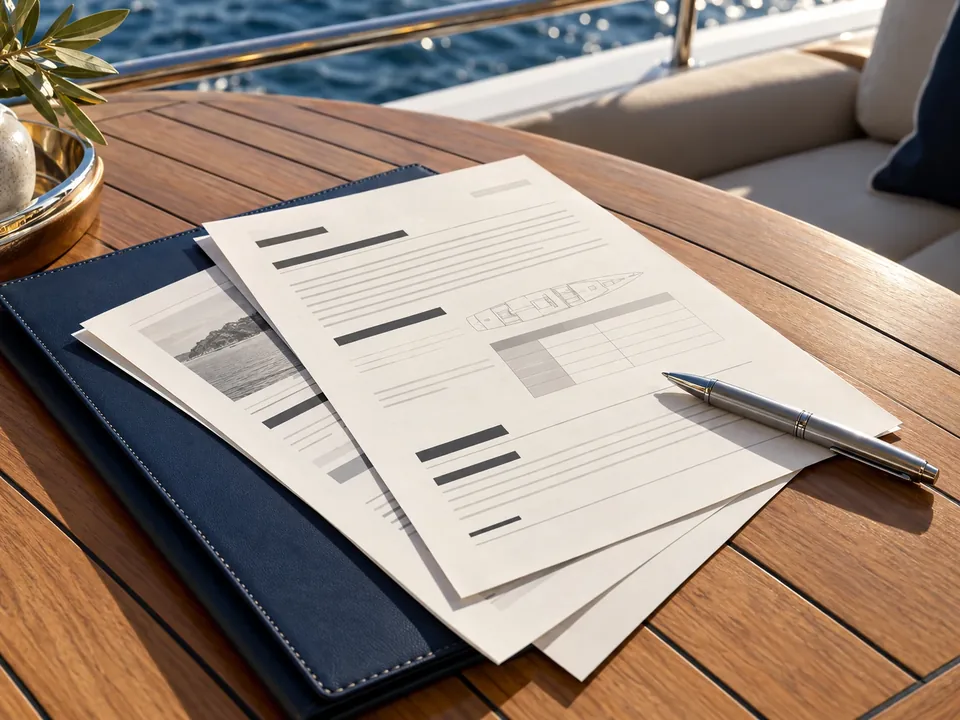
Use this structure:
Recommendation: Proceed with [yacht] for [dates], subject to [specific remaining conditions].
Why it fits: Three reasons tied to the approved brief.
Trade-offs: Cabin, access, itinerary or service compromises requiring acceptance.
Budget: Expected final spend; higher-spend scenario; unresolved items; currency assumptions.
Cash required: Initial payment, subsequent due dates, APA and any security deposit.
Exposure: Adviser-reviewed cancellation and disruption questions; insurance selected or declined.
Evidence gaps: Each gap, who must resolve it and the deadline.
Authority requested: Signatory, payment approval and permitted spending discretion.
What are the final stop conditions?
Do not approve a transfer while any of the following remains material and unresolved:
- The yacht’s identity, contracting authority or payment beneficiary cannot be reconciled.
- Guest permissions or required local operating arrangements are not established.
- The family cannot be allocated acceptable cabins.
- Essential access or equipment depends only on a marketing description.
- Tax assumptions or excluded costs prevent a credible total budget.
- The actual agreement and special conditions have not been reviewed.
- Cancellation exposure exceeds what the principal understands and accepts.
- Payment verification has been bypassed.
Sources cited
This page does not link to an external source directly.
All sources for Do-it-yourself game plans