How do I compare superyacht charter proposals fairly?
Put each proposal through the same requirements, cost assumptions and evidence checks. Keep suitability separate from evidence completeness: a promising but undocumented feature is not a verified advantage.
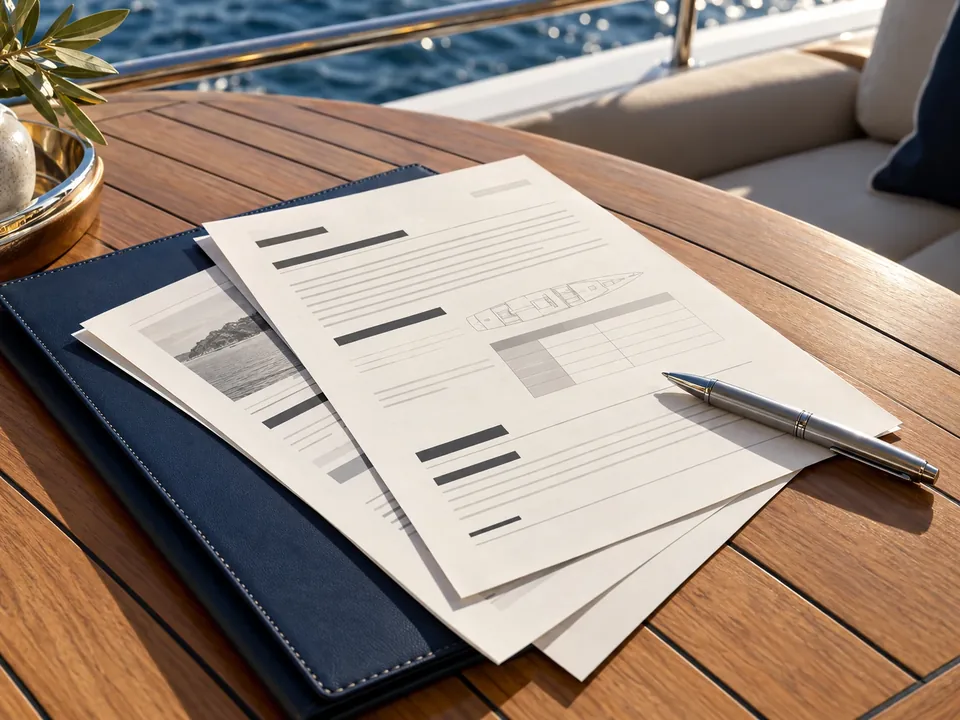
Use this recommended yacht charter comparison spreadsheet structure:
| Comparison field | Yacht A | Yacht B | Yacht C |
|---|---|---|---|
| Exact dates and hours | |||
| Availability evidence and timestamp | |||
| Base fee, currency and exclusions | |||
| Expected final expenditure | |||
| Higher-spend scenario | |||
| Guest limit and supporting confirmation | |||
| Named cabin allocation | |||
| Boarding and circulation requirements | |||
| Current captain, chef and service team | |||
| Essential equipment and operating status | |||
| Captain-reviewed route | |||
| Contract issues requiring resolution | |||
| Remaining decision blockers |
Apply four evidence labels:
- Documented: supported by the relevant current document.
- Supplier-stated: confirmed by a named person but not independently established.
- Estimated: dependent on visible assumptions.
- Not established: insufficient information.
For non-negotiables, use fits / conditional fit / does not fit / unknown, rather than a weighted score. A spacious sun deck should not compensate mathematically for an unusable boarding arrangement.
Your recommendation should read: “Choose Yacht B, subject to these two confirmations,” not simply “Yacht B scored 87.”
Sources cited
This page does not link to an external source directly.
All sources for Direct questions